Your Second Baby Doesn't Care What Worked the First Time
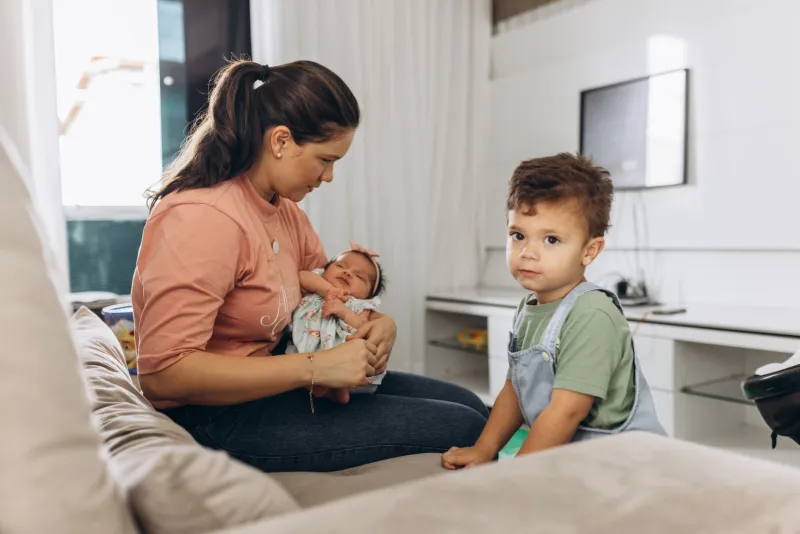
You did it. You made it through the sleep deprivation, the feeding confusion, the milestone anxiety, and the approximately 4,000 unsolicited opinions from well-meaning relatives. You have a toddler who eats (mostly) real food and sleeps (mostly) through the night. You've got this parenting thing figured out.
And then Baby Number Two arrives and completely blows up everything you thought you knew.
If you're expecting your second child — or you're already in the thick of it, wondering why nothing is going the way it did last time — you're not imagining things. Parenting a second (or third, or fourth) child is genuinely a different experience, not just a repeat with a smaller audience. The sooner you make peace with that, the better off your whole family will be.
The Confidence Trap
Here's the sneaky thing about going into round two: your confidence is both your greatest asset and your biggest blind spot.
With your first baby, you Googled everything. You read the books, joined the Facebook groups, called the pediatrician about rashes that turned out to be nothing. That hypervigilance was exhausting, sure — but it also meant you were paying close attention. You were learning in real time.
With your second, you walk in assuming you already know the answers. And you do know a lot. But that familiarity can make you less likely to notice when this baby is actually telling you something different.
Jamie, a mom of two from outside of Columbus, Ohio, put it this way: "With my first, I tried every sleep method until something clicked. With my second, I just kept trying the thing that worked for my oldest — for way too long — because I was so sure it would eventually work. It didn't. She needed something completely different, and I almost missed it because I wasn't really listening."
The lesson isn't that your experience is worthless. It's that experience works best when it stays flexible.
Birth Order Is Real (And It Matters More Than You Think)
Developmental researchers have been studying birth order for decades, and while the science is nuanced, a few patterns hold up consistently. First-born children tend to receive more one-on-one adult interaction in their early years, which often shapes how they communicate and seek attention. Second-born children, by contrast, grow up with a built-in social environment — an older sibling who is simultaneously a playmate, a rival, and an unpredictable roommate.
What does that mean practically? Your second baby is likely to be more socially stimulated from day one, more adaptable to noise and chaos, and possibly more emotionally reactive to changes in the family dynamic. They're not starting from the same baseline your first child did.
This shows up in sleep, feeding, and temperament in ways that can genuinely catch you off guard. A schedule that created a calm, predictable routine for your firstborn might be nearly impossible to maintain when you've got a preschooler with soccer practice and a meltdown schedule of their own.
The Sibling Variable Nobody Warns You About
Your first baby's world was, in many ways, controlled. Nap times happened when nap times were supposed to happen. Bedtime routines were sacred. You could engineer the environment.
Your second baby's world includes a small, loud, deeply opinionated person who has no concept of "the baby is sleeping" and very strong feelings about whether Bluey should be on right now.
This isn't a parenting failure. It's just the reality of a multi-child household, and it means your second child will almost certainly develop a different relationship with sleep, noise, and routine than your first did — often because they have to.
Many parents of multiple kids report that their second child is a lighter sleeper, more easily disrupted, but also quicker to self-settle — possibly because they've been adapting to unpredictability since birth. Others find the opposite: that the ambient noise of a busy household actually becomes white noise their baby finds comforting.
The point is, you won't know until you pay attention to this baby, in this environment, with this family.
What Actually Transfers (And What Doesn't)
Let's be real — your first-time experience isn't useless. Far from it. Here's what genuinely carries over:
Emotional regulation. You know now that the 3 a.m. panic is survivable. That knowledge alone is worth something enormous.
Pediatrician relationships. You've already built trust with your care team, which means faster, more confident conversations about your new baby's health.
The basics of baby care. Swaddling, burping, reading hunger cues — that muscle memory is real and it helps.
Knowing your own limits. You've learned what kind of support you need, what drains you fastest, and where you need to ask for help.
What doesn't transfer as cleanly:
- Specific sleep training methods or schedules
- Feeding preferences and tolerances
- Milestone timelines (every child is genuinely different)
- What soothes them, what overstimulates them, what makes them laugh
Those things? You're starting fresh. And honestly, that's kind of the gift.
Recalibrating Your Expectations — Without Losing Your Mind
So how do you actually navigate this? A few things that parents in the thick of it have found genuinely useful:
Treat your second baby like a first baby in the ways that matter. Observe before you assume. Give yourself permission to try new approaches without feeling like you're admitting failure.
Build flexibility into your routines instead of rigidity. A loose rhythm — feed, play, sleep — often works better in a multi-child household than a minute-by-minute schedule that falls apart the moment your toddler needs you.
Talk to your older child about the baby's needs in age-appropriate ways. Kids who feel included in the "why" behind quiet time or nap schedules are more likely to cooperate — at least some of the time.
Give yourself actual grace, not just the Instagram version of it. Some days the baby's nap will happen in the car because you were at pickup. That's not a setback. That's Tuesday.
Your Family, Your Version
Here's the thing about parenting your second child: it's an invitation to become an even more intuitive parent than you already are. The rigid rule-following of the first-time experience often gives way to something more responsive, more attuned, more genuinely personalized — because it has to.
You can't control everything when there are two kids in the mix. But you can pay attention. You can stay curious about who this new little person actually is, rather than who you expected them to be based on the one you already know.
That's not starting over. That's leveling up.
And if the sleep schedule falls apart for the third week in a row, and the toddler is losing it, and the baby is cluster feeding again? You've been here before. Maybe not exactly here — but close enough to know you'll make it through.
You always do.