Build a Nursery That Grows With Your Baby (Not Just for the Instagram Reveal)
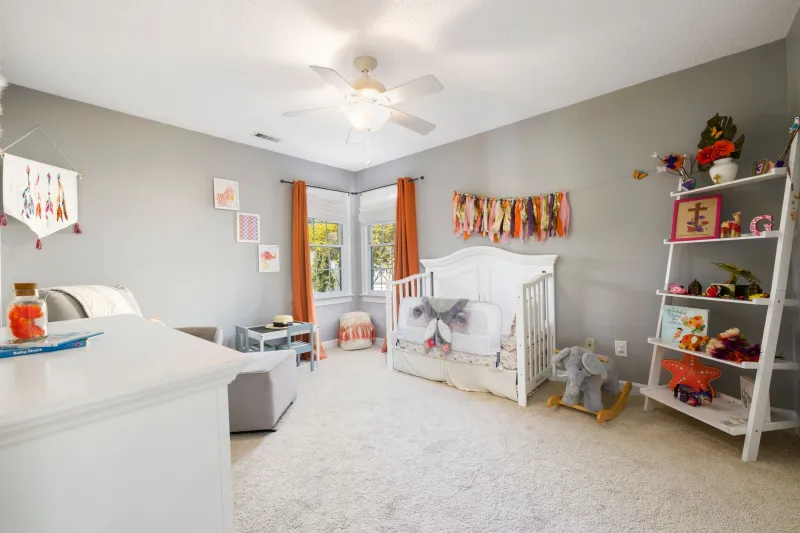
Everyone loves a nursery reveal. The coordinated bedding, the perfect wall art, the little name letters above the crib. It's genuinely lovely. But here's what nobody talks about as much: six months after that reveal, your baby is flipping onto their stomach, pulling everything within reach, and completely uninterested in the aesthetic you carefully curated.
A nursery that's designed only for the newborn phase is a room you'll be redesigning before your child's first birthday. The smarter play? Build a space that's modular from the start—one that grows alongside your baby, fits your actual living situation, and doesn't require a full overhaul every time your kid hits a new milestone.
Here's how to do it, room element by room element.
Start With the Sleep Zone
The sleep zone is the heart of any nursery, and it's also where most families make their most expensive, least flexible choices.
The crib situation: A convertible crib is one of the best long-game investments you can make. These convert from crib to toddler bed to, in some models, a full-size bed frame. Brands like DaVinci, Babyletto, and IKEA's SUNDVIK line offer solid options at a range of price points. If budget is tight, look for secondhand convertible cribs (just make sure to verify the model hasn't been recalled at CPSC.gov).
What to skip early on: A separate bassinet in the nursery sounds practical, but if you're planning to room-share for the first few months (which the American Academy of Pediatrics recommends), you may never use a nursery bassinet at all. Save that money for something with longer staying power.
Case study — small apartment: Jenna and Marcus in Chicago live in a 750-square-foot two-bedroom. Instead of a traditional crib, they chose a mini crib with wheels that could move between rooms. When their daughter Lily started sleeping through the night at 5 months, the crib rolled into her own space—a corner of the second bedroom they'd sectioned off with a bookshelf divider.
Furniture That Does More Than One Thing
Nursery furniture tends to be precious and purpose-built, which is exactly the wrong approach for a room that needs to evolve quickly.
The dresser-as-changing-table: A standard dresser with a removable changing topper is one of the most versatile swaps you can make. Once your child is potty trained, the topper comes off and you have a dresser that works for years. Compare that to a dedicated changing table, which becomes a very expensive shelf by age two.
Shelving over toy boxes: Open shelving (properly anchored to the wall—always anchor to the wall) gives you flexibility that a toy chest doesn't. At the newborn stage, shelves hold books, white noise machines, and diaper supplies. At 18 months, you rotate in board books and simple toys at reachable height. By preschool, your child is independently accessing their own stuff, which supports the kind of independence you want to encourage anyway.
The glider question: A good glider or nursing chair is worth the investment—but buy one that doesn't scream "nursery." A comfortable accent chair in a neutral fabric will move to your living room or bedroom when the nursery becomes a big-kid room. A chair shaped like a cartoon animal will not.
Storage That Scales
Storage is where nursery planning most often breaks down. You buy organizers sized for newborn onesies, and eight months later you're drowning in 12-month separates with nowhere to put them.
Go adjustable: Cube storage units (IKEA's KALLAX is the classic, but plenty of competitors exist) are adjustable by nature. You can add bins, drawers, or shelving inserts as your needs change. They work for tiny onesies, then for bigger clothes, then for toys, then for books and school supplies.
Label by function, not by size: Instead of organizing by clothing size (which changes constantly), organize by function—sleep clothes, daytime clothes, outerwear. This system stays consistent even as the sizes inside the bins change.
Under-crib storage: The space under a crib is prime real estate that most families underuse. Flat rolling bins can hold seasonal clothing, extra bedding, or gear you're not currently using. When the crib converts to a toddler bed and eventually loses that clearance, the bins migrate to a closet.
Case study — shared room: The Okafor family in Atlanta has three kids sharing one bedroom. They used a loft bed for their oldest, which freed up floor space for a crib for the baby below. A rolling cart served as a mobile changing station that tucked under the loft during the day. As the baby grew, the cart became a craft supply station—same piece, completely different function.
Personalizing for Your Specific Situation
Not every nursery starts from the same baseline, and the design choices that make sense for a family in a 2,500-square-foot suburban home are completely different from what works in a multigenerational household or a city apartment.
For small spaces: Prioritize vertical storage over floor footprint. Wall-mounted shelves, over-the-door organizers, and furniture with legs (which creates visual space and literal storage underneath) all help a small room feel functional rather than cramped. Light colors and a single focal point (a statement mobile or wall decal) keep things from feeling cluttered.
For shared rooms: Create visual zones rather than physical walls. A rug under the crib area, different lighting for each zone (a nightlight for the baby's corner, a reading lamp for older kids), and clearly defined shelving for each child's belongings go a long way. Blackout curtains are your best friend when bedtime schedules don't match.
For multigenerational homes: If a grandparent is regularly caring for your baby, design with their comfort in mind too. That means a chair with armrests for easier sitting and standing, storage at accessible heights, and a monitor setup that's intuitive for multiple caregivers. The nursery isn't just your space—it's a caregiving space for your whole support system.
The Decor Layer: Make It Personal Without Making It Permanent
This is where you get to have fun, and where flexibility matters most.
Wall decals peel off without damaging paint. Removable wallpaper has come a long way in the past few years and can completely transform a room without a lease-breaking commitment. Framed art swaps out easily. A gallery wall of family photos can grow and change as your family does.
Avoid anything that's literally nailed into a fixed theme. A woodland animals mural is adorable at 3 months. It's less adorable when your 4-year-old is really into dinosaurs and space.
Budget-friendly personalization: A single wall painted in a soft accent color (with the rest neutral) gives a room personality without locking you in. Add a name sign, a few meaningful objects, and textiles you love—that's a personalized nursery without a designer price tag.
The Room That Grows With Them
The best nursery isn't the most beautiful one or the most on-trend one. It's the one that still makes sense when your baby becomes a toddler, then a preschooler, then a kid who has opinions about their own space.
Design for the next three years, not just the next three months. Choose furniture that earns its keep across multiple stages. Build in flexibility wherever you can. And personalize in ways that are meaningful to your family—not just to the algorithm.
Because your nursery, like your parenting, should be built around your life. Not someone else's.