What's Actually in Your Baby Gear Collection (And Whether It Deserves to Stay)
Somewhere between the baby shower haul, the late-night Amazon purchases, and the neighbor's hand-me-down swing you swore you'd return, your home turned into a storage unit with a crib in it. Sound familiar?
Here's the thing nobody tells you: having a lot of baby gear and having the right baby gear are two completely different situations. One leaves you feeling prepared. The other leaves you stepping over a bouncer you've used three times to get to the changing table you use twenty times a day.
A baby gear audit isn't about organizing what you have. It's about honestly evaluating whether what you have is actually serving your family — and making clear-eyed decisions before you add anything new to the mix.
Start With a Full Inventory (Yes, All of It)
Before you can make any decisions, you need to know what you're working with. This sounds obvious, but most parents have gear scattered across multiple rooms, stashed in closets, shoved in garages, and piled in corners they've stopped seeing.
Grab a notebook or open a notes app and walk through your space room by room. Write down everything. The wipe warmer you forgot you owned. The three different types of pacifiers in the junk drawer. The sleep sack in size newborn that your baby outgrew at six weeks. Every item gets listed, no judgment attached yet.
This step matters because you can't make good decisions about what to buy — or what to get rid of — when you don't have a clear picture of your starting point. Parents regularly re-purchase items they already own simply because they couldn't find them. That's money and space lost simultaneously.
Room-by-Room: What to Actually Look For
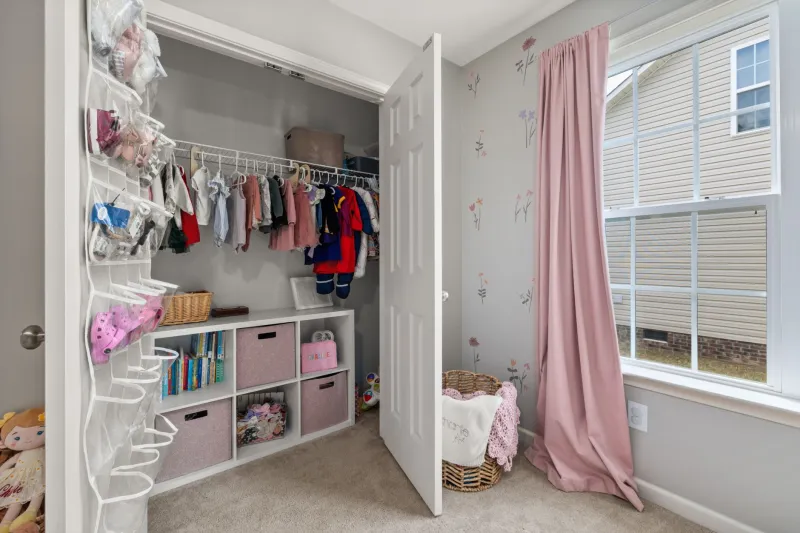
The Nursery This is usually ground zero for accumulation. As you inventory this space, note not just what's there but how often each item gets touched. The changing pad? Daily. The decorative mobile that your baby stopped caring about at two months? Probably not.
Ask yourself: Is the layout of this room working for how I actually move through it at 3 a.m.? If you're tripping over something or reaching around something else to get to what you need, that's information. Functionality matters more than aesthetics when you're sleep-deprived.
The Living Room and Common Areas Baby gear has a way of colonizing shared spaces. The bouncer that migrated from the nursery, the play mat that's now a permanent living room fixture, the baby monitor sitting on the coffee table — all of it counts. Assess whether these items are here because they're genuinely used in this space or because you just stopped moving them.
The Kitchen Bottle warmers, formula dispensers, nursing pillows that somehow ended up near the refrigerator, extra bibs, the high chair that takes up a quarter of your kitchen square footage — list it all. Note which items you reach for daily versus which ones you work around.
Storage Spaces The garage, hall closet, under the crib — these are where gear goes to die. Pull it out and look at it honestly. Gear you're storing "just in case" deserves a harder look than gear you're actively rotating through stages.
The Three Questions That Actually Drive Good Decisions
Once you have your full inventory, run each item through this filter:
1. Does this fit how I actually parent — not how I planned to parent? You may have registered for a beautiful wooden rocker because you imagined peaceful nursing sessions. If you actually nurse on the couch with your phone propped on your knee, that rocker isn't serving you — it's just furniture that cost a lot. There's no shame in that. Parenting rarely looks like the vision board version. What matters is building around the reality.
2. Is this item stage-appropriate right now? Baby gear has a short shelf life by design. Items that were essential at two months may be completely irrelevant at six months. If something is sitting in your space but your baby has moved past needing it, it doesn't belong in your active setup. It belongs in a donate pile, a resale pile, or storage if you're planning for another child.
3. Would I buy this again today, knowing what I know? This is the gut-check question. If the answer is a clear no, that item has told you something important. Not every purchase is going to land — that's just parenting reality. But holding onto gear you wouldn't choose again just because you spent money on it keeps your space cluttered and your decision-making murky.
Identifying the Real Gaps
Here's where the audit gets useful in a different direction. Once you know what you have and what's actually working, you can look clearly at what's missing — based on your real life, not someone else's checklist.
Maybe you realize you have four swaddle options but no good solution for the transition out of swaddling that your four-month-old is hitting. Maybe you've got a monitor with every feature imaginable but nothing that actually helps your baby settle back to sleep independently. Maybe the gap isn't a product at all — it's a routine, a schedule tweak, or an approach you haven't tried yet.
This is where personalized parenting really kicks in. A generic "what you need" list doesn't know that your baby hates being worn but loves the swing, or that you've got a two-story house and need sound coverage in places a single monitor can't reach. Your gaps are specific to you, and filling them should be just as specific.
Making the Stay-or-Go Call
For everything that didn't pass the three-question filter, you've got options: sell it, donate it, pass it to someone in your circle, or toss it if it's genuinely past its useful life or outside current safety guidelines.
For everything that did pass the filter, get intentional about where it lives and why. If it's in your active rotation, it should be accessible. If it's stage gear you're holding for later, store it somewhere that doesn't eat into your daily space.
And before you add anything new — whether it's something on your wish list or a recommendation from a well-meaning friend — run it through the same questions first. Does it fit how I actually parent? Is it right for where my baby is right now? Would I choose this knowing what I know?
The goal isn't a minimalist nursery for the 'gram. It's a home that works for your family, with gear that earns its spot. That looks different for everyone — and that's exactly the point.